

Qeynos
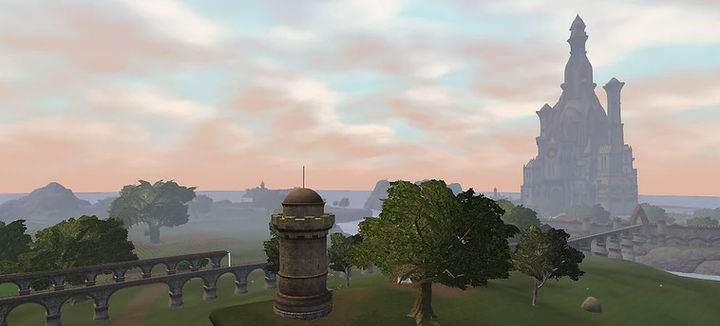
Qeynos: A Chronicle of the City of Light
Compiled for the Archives of the Norrath Secret Society By the Unseen Hand, Lorekeeper of the Veil
"A city is not its walls. It is not its towers, nor its harbor, nor the length of its avenues, nor the brightness of its lanterns against the dark. A city is its memory. And Qeynos remembers everything." — Attributed to an unnamed scholar of the Concordium, date unknown
Part the First: On the Nature of the City
There are places in Norrath where the world holds its breath.
Where two rivers once met upon the western shore of Antonica, the land itself seems to know that something singular was built upon it, something that would outlast the ambitions that raised it, the wars that tested it, the catastrophes that broke the world around it and left it standing still. Scholars who have bent their lives over the question of Qeynos often arrive, after many years of labor, at the same conclusion: the city endures not because of the strength of its walls, though those walls are formidable, and not because of the valor of its guards, though that valor is storied. Qeynos endures because it was built around an idea. And ideas, unlike stone, do not crumble.
That idea was simple enough in its stating and immeasurable in its cost: that civilization, freely chosen and honorably maintained, was worth defending against every darkness that sought to extinguish it. Every stone laid in the founding of Qeynos was laid in service to that principle. Every generation of the Bayle line that governed it, from the first great Antonius to the woman who holds the city's fate in her hands in this present age, has been asked at one point or another to pay for that principle in blood. Most of them did.
What follows is a reckoning. It is not a complete history. No single text could compass what Qeynos has witnessed and endured across the centuries. But it is an honest one, compiled from the records available to the Society's archives, from the accounts of those who walked beneath those walls in eras long past, and from the testimony of the city itself, written in its architecture and its scars alike. Read it with the patience it deserves. The City of Light did not build itself in a day, and it cannot be known in a glance.
Part the Second: The Founding and the First Bayle
The city that stands today upon the shores of the Shattered Lands was not the first settlement to occupy that ground. Long before Antonius Bayle set his name to the founding charter of Qeynos, the western reaches of Antonica were inhabited by scattered communities of humans and half-elves, fisherfolk and farmers and wandering soldiers of fortune who had drifted westward from older centers of civilization seeking land that had not yet been claimed by someone else's ambitions. They built rough things, these early settlers. Palisades of rough timber, hearths of flat river stone, roads that were little more than trampled grass between one cluster of huts and the next. They were not a people who expected permanence.
Antonius Bayle changed that expectation. He arrived not as a conqueror but as an architect of something more durable, a man who saw in the confluence of rivers and the natural harbor formed by the coastline not merely a defensible position, but a destiny. The histories preserved in the Concordium's oldest vaults describe him as a figure of unusual temperament for his age, neither a warrior chieftain in the mold of the northern peoples nor a merchant prince of the eastern model, but something rarer: a builder who understood that the most lasting structures are not made of stone at all. He was a man who could articulate, in plain language that a fisherman or a knight could equally understand, the difference between a settlement and a civilization. A settlement is a place where people live. A civilization is a place where people choose to live together under a covenant of mutual obligation. Antonius Bayle wanted a civilization.
He began with the walls. Not the towers and gates of legend as they came to be depicted in later centuries, but something far more modest: a proper perimeter of cut stone around what would become the city's heart, wide enough to shelter the community he had already begun to draw together and tall enough to make clear to whatever darkness lurked in the surrounding lands that this place was no longer merely a collection of huts. Within those walls, he laid the foundations of the institutions that would define Qeynos for generations. A council to govern. A guard to protect. A market where honest trade was guaranteed by the weight of civic authority behind it. A hall of record, because he understood that a people without a written memory is a people that will one day forget how to be a people.
He called the city Qeynos, and the origin of that name has been a matter of cheerful dispute among scholars ever since. Some hold it derives from an older dialect of the western human tongue, meaning roughly "gathered" or "assembled," a reference to the community he was calling together. Others argue for a purely personal etymology, a name drawn from an ancestor's memory or a language older than any now spoken in Norrath. Still others, with somewhat less academic rigor, suggest he simply liked the sound of it, and that the sound has become so woven into the memory of a world that the question of its origin no longer matters.
What is not in dispute is what the name came to mean. Within a generation, Qeynos was the largest human settlement on Antonica's western coast. Within two generations, it was the seat of a recognized political authority whose influence extended across the surrounding lands. Within three, it was the undisputed capital of what historians would later call the Kingdom of Qeynos, though Antonius Bayle himself was careful never to use such a word. He called himself a steward, not a king. The distinction mattered to him, and the successors who understood him carried it forward.
Part the Third: The Dynasty of Bayle and the Architecture of Continuity
The Bayle name is inseparable from the history of Qeynos, and it is impossible to tell the story of one without telling the story of the other. What is remarkable, and what has inspired commentary from every serious student of Norrathian political history, is not merely that a single bloodline held authority in the city for so long, but that the bloodline consistently managed to produce individuals who were, if not always great, at minimum adequate to the demands of their age. Dynasties founded on military conquest have a tendency to produce, after the first heroic generation, a succession of administrators of diminishing ability. The Bayle line is a more complicated case.
Antonius Bayle the Second, son of the founder, was by most accounts a capable administrator and an indifferent warrior who had the considerable good fortune to inherit a city in a relatively peaceful period. He used that peace wisely, expanding the harbor, commissioning the first formal maps of the surrounding territory, and establishing the trade routes with the eastern city-states that would fund Qeynos's continued growth for generations. He was not beloved in the way his father was, but he was respected, and in the governance of a city that is often sufficient.
The successors who followed in the centuries before the great catastrophe of the Shattering were a varied company. Some are remembered with warmth: Antonius the Third, who expanded the city's walls to accommodate the immigrant communities of halflings, gnomes, and dwarves who had begun arriving in significant numbers from their ancestral lands, and who enshrined in the city's foundational codes the principle that citizenship in Qeynos was earned by conduct and covenant rather than by race or origin. This was not a small thing. In an age when the borders between peoples were often patrolled by suspicion and old enmity, Qeynos's policy of inclusion was genuinely radical, and it shaped the character of the city in ways that are still visible today.
Others of the Bayle line are remembered with more ambivalence. There were those who prosecuted wars against the territories of Freeport before the great schism that separated the cities permanently, wars that Qeynos sometimes won and sometimes did not, and whose causes historians continue to debate with some heat. There were those who allowed the city's institutions to calcify for a generation before a more energetic successor inherited the problem and spent half a reign clearing the accumulated debris of neglect. None of them were without flaw, which is to say, none of them were unlike most rulers in the long history of mortal governance.
But the dynasty held. Through disagreements between city factions that occasionally threatened to become outright civil conflict, through the quiet crises of succession when an heir died young or proved unable or a council of regents temporarily exercised power in the name of a child too small to hold a pen, through the grinding attrition of years in which nothing heroic occurred and the city simply needed to be maintained, the Bayle name remained the organizing principle of Qeynos. And the city grew.
By the era that scholars call the Late Second Age, in the years before the catastrophes began, Qeynos had become something that would have astonished its founder. Its harbor admitted ships from every corner of Norrath. Its markets moved goods from the deserts of distant Ro, from the forests of Faydwer, from the cold mountains of Velious and the jungles of Kunark. Its academies trained mages of the Concordium, whose experiments with arcane forces contributed in ways not always fully acknowledged to the intellectual life of the entire continent. Its temples honored the gods of light with a consistency and devotion that made the city one of the sacred centers of the followers of Mithaniel Marr, Rodcet Nife, Tunare, and the other figures of what the faithful called the Pantheon of Light. It was, by any reasonable measure, a city at the height of its power.
Then the sky fell.
Part the Fourth: The Great Schism and the Shadow Across the East
Before the catastrophes that remade the physical world, there was a different kind of rupture, one that divided Norrath not along geological fault lines but along the far more intractable borders of human ambition and irreconcilable political philosophy.
Freeport had always been Qeynos's counterweight. Where Qeynos organized itself around the principle of civic covenant and shared obligation, Freeport organized itself around the principle of power: who had it, who wanted it, and what price was sufficient to purchase one from the other. The two cities had coexisted in productive tension for generations, trading with each other even when they quarreled politically, finding in their mutual rivalry a kind of energy that neither might have generated alone. Scholars of political philosophy have written extensively about this relationship, most of them arriving at the conclusion that Norrath was in some ways better served by having two powerful cities with opposing philosophies than it would have been by having one city with an unchallenged view of how civilization should be arranged.
Then came Lucan D'Lere.
The history of how Lucan D'Lere came to rule Freeport is a story that belongs properly to a chronicle of that city, not this one. What belongs here is the consequence, for Qeynos, of his ascension. Lucan D'Lere was not merely a more ambitious or more ruthless version of the rulers who had preceded him in Freeport. He was something categorically different: a man who had found, through means that remain partially obscure even to the most diligent scholars, a way to circumvent the mortality that limits the ambitions of ordinary rulers. He does not age. He does not die, or at minimum, has not done so despite the passage of many centuries since his seizure of power. He rules Freeport not as a temporary steward of its political authority but as a permanent fixture, an Overlord whose tenure is measured not in years but in eras.
The effect of this on the relationship between the two cities cannot be overstated. A rivalry between two cities is manageable, a natural feature of the political landscape that can be navigated through diplomacy, trade, and the occasional limited conflict. A rivalry between a city governed by the ordinary succession of mortal rulers and a city controlled by a single immortal Overlord of vast personal power and patient, long-term ambition is something else entirely. Every agreement Qeynos reached with Freeport under D'Lere's rule was an agreement made with a man who had, in principle, unlimited time to wait for the moment when it could be broken to his advantage. Every generation of Qeynos's leadership had to re-learn and re-negotiate what their predecessors had established. D'Lere simply waited.
The cold conflict between Qeynos and Freeport that characterizes the political landscape of the present age was born in those early years of D'Lere's rule. It manifests in a dozen ways across the lands between the two cities: in the allegiances that settlements and communities are quietly pressured to declare, in the movements of mercenary companies whose loyalties shift with the pay, in the quiet war of intelligence and counter-intelligence conducted by the agencies of both cities in the contested territories. It is not a hot war, most of the time. The two cities have too much to lose from direct conflict, and D'Lere is too calculating to spend his resources on battles he is not certain of winning. But it is never truly peace, either. The shadow of Freeport lies permanently across the eastern horizon of Qeynos's political calculations, and every leader of the City of Light has had to govern with one eye on that shadow.
Part the Fifth: The Rending, the Shattering, and the End of the Old World
The histories call it the Rending. The faiths call it the Silence of the Gods. Common memory, in the taverns and market squares where people speak of things they cannot fully comprehend, calls it simply the Breaking, and leaves it at that.
What is known, pieced together from the records that survived and the testimonies of those who endured it, is this: the world changed. Norrath as it had existed for centuries, with its broad continents and its mapped roads and its cities of confident permanence, ceased to exist. The physical catastrophe was enormous. The earth shook with a fury that had no precedent in living memory or recorded history. Coastlines were redrawn as the sea swallowed lands that had stood for millennia. Mountain ranges collapsed. Rivers changed their courses. The great continents that had defined the geography of the known world were torn apart, reduced in many places to chains of islands separated by open water, remnants of what had been. Scholars who study the geological evidence of this period speak of it with a kind of numbed awe. The forces involved were, by any calculation, staggering.
And then, as if the earth's convulsions were insufficient, the moon was destroyed.
The explosion of the moon Luclin is one of the most contested events in the history of Norrathian scholarship, not because its occurrence is in doubt, for the physical evidence is overwhelming, but because its causes remain a subject of fierce debate. What is agreed upon is that the Combine Spires, those ancient teleportation structures that had once served as the backbone of Norrathian travel, played a role in the catastrophe, their energies somehow directed or misdirected in a manner that unleashed forces of annihilation on a scale difficult to comprehend. The fragments of Luclin that rained down upon Norrath in the years following its destruction altered the world further still, reshaping coastlines, poisoning certain lands, and leaving in the sky a permanent reminder, visible on clear nights, of what civilization had very nearly lost entirely.
Qeynos survived.
This bare statement, simple enough in its construction, contains within it an almost incomprehensible weight of human endurance. The walls held, or held enough. The harbor, battered by waves unlike anything in living memory, did not surrender entirely to the sea. The leadership of the city, whoever precisely held authority in those chaotic years when communication with the outer world was all but impossible and every day brought new crisis and new loss, made decisions in the darkness that preserved enough of what Qeynos was to allow it to become what it would need to be.
The districts that had defined the city were shaken. The institutions that had organized its life were disrupted. The trade routes that had sustained its economy were severed by the physical transformation of the world outside its walls. But the idea endured. The people endured. And in that endurance, as in so many of the worst moments of Qeynos's long history, was the seed of what came next.
Part the Sixth: Antonia Bayle and the Resurrection of the Light
Out of the years of catastrophe and confusion that followed the Shattering, a figure emerged who would define Qeynos for the age that was dawning.
Her name, the name she carries into history, is Antonia Bayle. The name is both hers and a title, an inheritance of blood and a deliberate choice, for she is the woman who chose to take upon herself the weight of the Bayle legacy at the moment when that legacy was most precarious and its survival most uncertain. She had not expected to rule. Few who rule well ever do. The chaotic passage of authority in the years of the Shattering had cleared the field of other candidates in ways that were as much tragedy as opportunity, and when the crisis of legitimate leadership came to its crisis point, she was the one who stood.
What she inherited was a city that was alive but shaken, functional but wounded, proud but uncertain of what there was left to be proud of. The old Qeynos, the confident capital of a recognized political order with established relationships and clear borders and functional institutions, was gone. What remained was the potential for something, but potential is not the same as reality, and the distance between them is measured in will.
Antonia Bayle closed that distance.
She began, as her ancestor the founder had begun, not with grand proclamation but with the patient work of institution-building. The council was reformed and given clear authority. The guard was reorganized, its ranks swelled by volunteers and veterans alike who needed purpose as much as Qeynos needed defenders. The harbor was repaired and reopened, the first ships setting out to make contact with the scattered communities that had survived in the islands of the Shattered Lands beyond the city's direct sight. The temples were rebuilt and reopened, which mattered as much for the psychological life of the city as for any theological reason, because the gods had been silent for years and the people of Qeynos needed visible evidence that the covenant between mortal and divine had not been permanently severed.
That covenant's renewal proved to be one of the defining events of the age. The gods returned. Not all of them, and not all at once, but they returned, stepping back from the silence they had maintained across the years of catastrophe and making themselves known again to a world that had very nearly convinced itself that the divine had abandoned it entirely. The return of the gods transformed the spiritual landscape of Norrath in ways that are still unfolding, and Qeynos, as one of the great centers of light-aligned faith on the continent, was at the heart of that transformation.
Antonia Bayle navigated all of this with a quality that her chroniclers consistently describe as clarity. Not brilliance in the flashy sense, not the inspirational fire of a general rallying a losing battle, but the quieter and in many ways rarer quality of a ruler who can look at a complex situation and perceive, with unusual accuracy, what matters and what does not, and can communicate that perception to the people who need to act on it. She was not without political enemies. No ruler of a city as complex as Qeynos could be. But she was, in the judgment of those who served her and those who opposed her alike, genuine in her stated commitments in a way that made even her enemies reluctant to dismiss her as merely another cynical player in the political games of the age.
She rules still. In an age when Lucan D'Lere's unnatural longevity has given Freeport an anchor of inhuman permanence, Antonia Bayle's continued presence at the head of Qeynos gives the City of Light something comparable, though achieved by entirely different means. Where D'Lere's permanence is the cold persistence of a man who has made himself into something no longer entirely mortal, Antonia Bayle's is the living continuity of a covenant renewed in each generation of citizens who choose, again and again, to be part of what Qeynos represents.
Part the Seventh: The City and Its Districts, Peoples, and Faces
To understand Qeynos, one must walk its districts, for the city is not a single thing but a community of communities, each with its own character, its own rhythms, and its own particular relationship to the whole.
The Harbor is the city's first face and its oldest. It was here that the earliest walls were raised, here that the fishing communities of the original settlement chose the ground on which something larger would eventually be built. Today it is the throat through which the city breathes, the place where cargo arrives and departs, where the sailors of the Shattered Lands bring the goods of distant communities and take back the products of Qeynos's considerable craftsmanship and trade. The Harbor smells of salt and timber and honest labor, and it is perhaps the district where the essential character of Qeynos, pragmatic, open, suspicious of pretension, is most clearly visible. Here, a halfling merchant and a half-elf sailor and a gnome engineer with oil-stained hands negotiate deals with equal dignity, because the Harbor recognizes a useful person regardless of their height or the shape of their ears.
North Qeynos is older, quieter, and more formal. This is where the city's administrative buildings stand, where the Guild of Commerce conducts its more refined negotiations, where the noble houses of Qeynos maintain their townhouses and private gardens behind walls of stone considerably more decorative than anything in the Harbor district. It is the face the city presents to visiting dignitaries and foreign emissaries, a face of order and prosperity and long tradition, and it is not an entirely false face, but it is a curated one.
South Qeynos, sometimes called the Artisan Quarter by those who prefer precision to romance, is where the city makes things. The forges and workshops of the Ironforge Exchange have their heart here, the great alliance of crafters whose members include the finest weaponsmiths, armorers, tailors, jewelers, and woodworkers in the region. The Ironforge Exchange is in many ways a microcosm of Qeynos at its best: an institution that rewards demonstrated skill over family name, that has managed to maintain quality standards across several generations of catastrophic disruption, and that serves both the city's internal needs and its export trade with a competence that would be mundane if it were not also impressive.
The Baubbleshire is, as it has been since the halflings of Rivervale began arriving in Qeynos in significant numbers, the most comfortable-looking district in the city, which is to say it is full of round doors and well-tended kitchen gardens and the perpetual smell of something baking. This is not to diminish it. The halflings of the Baubbleshire are a community of extraordinary social cohesion, one of the oldest and most stable minority populations in the city, and their presence has contributed enormously to the civic culture of Qeynos in ways that are easy to overlook because they are expressed in the unglamorous virtues of reliability, neighborliness, and the refusal to consider any civic obligation too small for serious attention.
The Willow Wood is the city's green heart, the district where Qeynos's considerable wood elf population has shaped the urban landscape to something that can hold a tree without killing it. Temples of Tunare rise here amid carefully tended groves. The presence of the naturalist faiths and the fae-aligned communities gives the Willow Wood a character distinct from every other district in the city, a reminder that Qeynos's covenant of inclusion was always meant to extend not merely across the boundaries of human culture but across the wider community of peoples who call the light their own.
Nettleville Hovel is the city's most plainly spoken district, the place where Qeynos wears no gilt at all. It is the home of the city's working poor, of recent arrivals not yet established, of those who are making their way toward something better and those who have come to terms with not getting there. Successive administrations of Qeynos have had complicated relationships with Nettleville: some have treated it as a problem to be managed, others as a community to be invested in. Antonia Bayle's administration has leaned toward the latter position, with results that are, as is so often the case with investments in social rather than material infrastructure, difficult to quantify but not difficult to observe for those who walk the district with honest eyes.
And then there is the Elddar Grove, named for the great trees that stand within it as living monuments to the forest kingdoms that once occupied much of Antonica before the coming of human settlement. The Elddar Grove is simultaneously a park, a place of worship, an archive of botanical knowledge, and a statement of philosophical commitment: the commitment of Qeynos to the proposition that civilization and the natural world need not be enemies, that a city can choose to protect beauty rather than consume it, and that some things are worth maintaining even when their maintenance costs more than their conversion.
Part the Eighth: The Factions That Govern and Guard
Qeynos is not governed by Antonia Bayle alone, nor by the council alone, nor by any single institution alone. It is governed, as all complex cities ultimately are, by the interaction of many organized groups of people whose interests overlap enough to permit cooperation and diverge enough to generate tension.
The Qeynos Guard is the most visible of these institutions, the men and women in armor who walk the city's streets, patrol its harbor, and man its walls. They are, in the judgment of those who have examined comparable forces in other cities of the age, a competent and relatively uncorrupt professional force, which is a higher compliment than it may initially appear. The history of cities is full of guards who were neither. The Guard is organized into a hierarchy of ranks with clear lines of authority and a tradition of internal accountability that reflects, in miniature, the broader civic principles of Qeynos. It accepts recruits from all races and alignments who can meet its standards, which was a policy not without controversy when it was first established and remains a point of civic pride for those who were never in doubt about it.
The Concordium is the city's mage organization, and it is among the most powerful arcane institutions remaining in the post-Shattering world. Its towers, rebuilt after the damage of the catastrophe years, house a community of scholars and practitioners whose research ranges from the immediately practical to the abstractly theoretical, often in the same afternoon. The Concordium has a complicated institutional memory, haunted in part by the knowledge that the arcane arts played some role in the catastrophe of the Shattering, and the debate within its halls about the proper limits and responsibilities of magical research has been conducted with unusual seriousness as a result. This does not mean the research has stopped. It means it is watched more carefully, debated more vigorously, and published with more attention to the safety of others than was customary in the previous age.
The Celestial Watch organizes the faithful of the light-aligned gods who make their home in Qeynos: the devotees of Mithaniel Marr, whose tradition of valor the city's founding rhetoric drew upon; the followers of Rodcet Nife, the Prime Healer, whose temples operate the city's most capable healing institutions; the faithful of Tunare, whose presence in the Willow Wood gives that district much of its character; and the various smaller congregations of the lighter pantheon who maintain their temples within the city. The Celestial Watch is not precisely a governing institution, but it wields enormous soft power in Qeynos, as any institution does when it controls the means by which a significant portion of the population understands its place in a larger moral order.
The Coalition of Tradesfolke is, to put it plainly, the organized voice of Qeynos's commercial class, and it is not an institution given to understatement about its own importance. This is, however, an importance that has a genuine basis. The Coalition represents the merchants, importers, exporters, and commercial middlemen whose activity constitutes a significant fraction of the city's economic life, and it has shown, across multiple crises, a capacity for collective action in defense of its members' interests that makes it a force any administration must reckon with. It is not always in harmony with the Guard, the Concordium, or the Celestial Watch. It is generally in harmony with Antonia Bayle's administration, because that administration has understood, with more sophistication than some of its predecessors, that a city that does not permit its merchants to prosper will eventually find that its merchants have gone somewhere that allows them to.
Part the Ninth: The Gods, the Return, and the Sacred Compact
No account of Qeynos is complete without a serious reckoning with the role of faith in the city's life, both historically and in the present age.
Qeynos was a city of light before that phrase had any formal theological meaning. The founding documents of Antonius Bayle speak of justice and order and mutual obligation in terms that are not precisely religious but that draw on the same deep wells of human moral imagination from which religion itself drinks. The gods of the light, when they are invoked in those early texts, are invoked as guarantors of the principles Bayle was articulating, not as the sources of those principles. This is a distinction that matters, because it means the city's fundamental commitments are not strictly dependent on any particular theology, a quality that has allowed Qeynos to accommodate diverse faiths within its walls without requiring that diversity to resolve itself into a single orthodoxy.
The Silence of the Gods, as those who lived through it called the years when the divine seemed to have withdrawn entirely from Norrath, was not merely a theological crisis for Qeynos. It was an identity crisis. A city that had organized much of its civic and spiritual life around the relationship between mortal covenant and divine sanction suddenly found itself in a world where that divine sanction was no longer audible, where the temples were maintained out of tradition and hope but the sense of active divine presence that had animated them was absent. The priesthoods continued their services. The faithful continued their prayers. The healers continued to heal, drawing on whatever reserves of faith and training were available to them in the silence.
And then the gods returned.
The return of the divine to Norrath in the opening of the Age of Destiny was not a quiet event. Those who were present in Qeynos at the moment when the Celestial Watch's senior priests first reported what they called a restoration of divine contact describe something between a religious ecstasy and a civic emergency, as a city's worth of people tried simultaneously to process information that overturned the assumptions of years. There was joy of the kind that leaves people unable to speak. There was grief, from those who had loved ones lost in the years of silence who now had to reckon with questions of divine purpose that no priest could fully answer. There was, in some quarters, anger of the kind that accumulates when hope has been denied long enough that its return arrives already complicated by the weight of what the waiting cost.
Antonia Bayle handled this moment, as she handled most moments of civic upheaval, by being visible and plain-spoken. She did not perform. She did not deliver speeches of theological triumph. She appeared in the temples alongside the faithful, acknowledged the complexity of what everyone was feeling, and directed the city's institutional energy toward the immediate practical tasks of re-establishing clerical functions and ensuring that the healing services that had maintained themselves on a reduced basis through the silence were restored to full capacity as quickly as possible. It was not heroic in any dramatic sense. It was what leadership actually looks like when it is working correctly.
Part the Tenth: The Cold War Continues
The political situation between Qeynos and Freeport, as it stands in this present age, is best understood not as a conflict with clear sides and a foreseeable resolution but as a permanent feature of the Norrathian landscape, like the tides or the seasonal migrations of the great beasts of Antonica. It will not end because neither of the forces driving it will yield to the pressure that would be required to end it.
Lucan D'Lere continues to rule Freeport with the patient, systematic efficiency of a man who has learned to think in centuries. His city is not without its internal contradictions: the brutal social hierarchy that concentrates power in the hands of the Freeport Militia and the organizations allied with the Overlord's regime creates resentments that occasionally erupt into the kind of factional conflict that requires active suppression. But D'Lere has shown, across many years, that he is capable of suppressing such conflicts as effectively as he is capable of exploiting the opportunities they present. He is not a ruler one can simply wait to fail.
Antonia Bayle's Qeynos must therefore maintain a posture of permanent vigilance without allowing that vigilance to harden into the kind of siege mentality that would ultimately undermine the open, inclusive character that is the city's greatest asset. This is a genuinely difficult balance to sustain. The city's intelligence services must remain active and well-funded without becoming the kind of apparatus that, once fully established, tends to find enemies wherever it looks. The Guard must be capable of defending the city against Freeport-backed aggression without becoming so dominant a presence in civic life that the citizens begin to feel policed rather than protected. The diplomatic corps must maintain channels of communication with Freeport even when those channels are used primarily to manage disagreements, because the alternative is a complete break that serves no one except those with an interest in open war.
In the contested territories between the two cities, this balance plays out daily in small but consequential ways. Communities that sit between the spheres of influence of the two great city-states are courted, pressured, and occasionally coerced into declaring allegiances that most of them would prefer not to declare at all. The resources of both cities flow into these territories in forms ranging from honest trade to political bribery to the deployment of mercenary forces whose instructions are carefully vague about what precisely they are being hired to accomplish.
The adventurers who move through these contested spaces, conducting the business of exploration and discovery and the clearing of ancient ruins, are not irrelevant to this political balance. Both Qeynos and Freeport understand that the individuals willing and able to descend into the dangerous places of the world are also the individuals capable of shifting the balance of power in those places, and both cities cultivate relationships with such individuals accordingly. The Society has observed this cultivation over many years. We note it without endorsing it and without condemning it, as it is simply a feature of the world in which we operate.
Part the Eleventh: The Age of Discovery and the Wider World
If the political situation between Qeynos and Freeport constitutes the primary axis of tension in the city's present life, it is not the only one, and the leaders of Qeynos who have focused exclusively on that axis have often been surprised by what arrived from directions they were not watching.
The Age of Destiny has been an age of discovery as much as an age of conflict. The catastrophe of the Shattering, for all its devastation, also reset the map of the known world in ways that created as many opportunities as it destroyed. Lands that had been inaccessible were revealed. Peoples that had been isolated were suddenly reachable. Ancient places that had been sealed or forgotten since eras before the founding of Qeynos itself were exposed by the geological upheavals and the transformation of the physical world.
The rediscovery of Faydwer was, for Qeynos, a moment of both reunion and complication. The elven and dwarven and gnomish communities of that ancient land had their own histories of the catastrophic years, their own political structures, and their own relationships to the gods and the wider world that did not always map cleanly onto the frameworks that Qeynos had developed in isolation. The integration of these communities and their needs into the political calculations of Qeynos required, and continues to require, a diplomatic sophistication that not every administration possesses in sufficient supply.
The rediscovery of Kunark brought its own challenges, as the continent of the iksar and the ruins of the great Ring of Scale civilization confronted Qeynos and the rest of Norrath with a history of the world that was simultaneously ancient and not yet finished. The iksar are not a people whose relationship with the rest of Norrath's inhabitants can be characterized as simple, and the ruins of their former empire contain knowledge of extraordinary value alongside dangers of extraordinary virulence.
Beyond these named lands, the Age of Destiny has brought awareness of threats from beyond the material world itself, from the Void and the entities that inhabit it, from powers whose interest in Norrath is not the ordinary interest of conquest or resources but something more fundamental and therefore more difficult to oppose with the ordinary tools of politics and military force. Qeynos has faced these threats alongside every other civilization of Norrath, and it has done so without abandoning the civic principles that define it, which is perhaps the most significant measure of the city's character that this chronicle can offer.
Part the Twelfth: A Lorekeeper's Final Reckoning
The city endures.
This statement, offered at the conclusion of this chronicle as it was offered at its beginning, is not a simple observation. It is the result of approximately five thousand years of accumulated decisions, most of them made by ordinary people in circumstances that offered no good options, only less bad ones. It is the inheritance of founders who understood that the most important thing they could build was not a wall or a harbor or a market but a community whose members believed, genuinely and deeply, that their city was worth the cost of maintaining it. And it is, in the present moment, the responsibility of the woman who carries the weight of the Bayle name and the Antonian legacy forward into an age that continues to generate threats of a scale and character that would have been inconceivable to the founder who first set stone upon stone at the meeting of two rivers on Antonica's western shore.
Antonia Bayle governs a city that is simultaneously ancient and perpetually new, a place where the oldest guild halls stand beside the businesses of recent arrivals who came seeking exactly what those halls represent and have found it, more or less, in the measure that every city can ever truly deliver on its promises. It is a city of contradictions held in productive tension: formal and informal, ancient and innovating, proud of its history and not quite at peace with all of it, committed to principles of openness and inclusion that have never been costless to maintain and have sometimes been honored more in proclamation than in practice.
It is, in short, a real city, with all the complications and compromises that reality demands of any place where many different kinds of people have chosen to make a life together under a shared covenant. It is not the perfect city that certain of its more enthusiastic chroniclers have depicted in certain of the more flattering periods of its history. It is something more interesting and more durable than that. It is a city that has been tested to the point of destruction and has not been destroyed. A city that has been led sometimes by greatness and sometimes by mere adequacy and has survived both. A city that carries its history in its stones and its scars alike, that cannot fully escape what it has been and has not, to its credit, tried very hard to escape it.
We, the Society, have made our home upon Antonia Bayle's server, and we have taken the name of this server as a quiet acknowledgment that we understand something of what it means to endure. The city whose name the server bears is not a legend. It is a living thing, contested and complicated and ongoing, as all living things are. We study it with the seriousness it deserves. We record its history with the fidelity its complexity demands. And we carry it forward in our chronicles, where it will outlast us, as Qeynos itself has outlasted every empire and catastrophe and confident prediction of its decline.
The flame endures.
Seek. Discover. Endure.
The Unseen Hand
Lorekeeper of the Veil
Norrath Secret Society