

The Norrath Secret Society
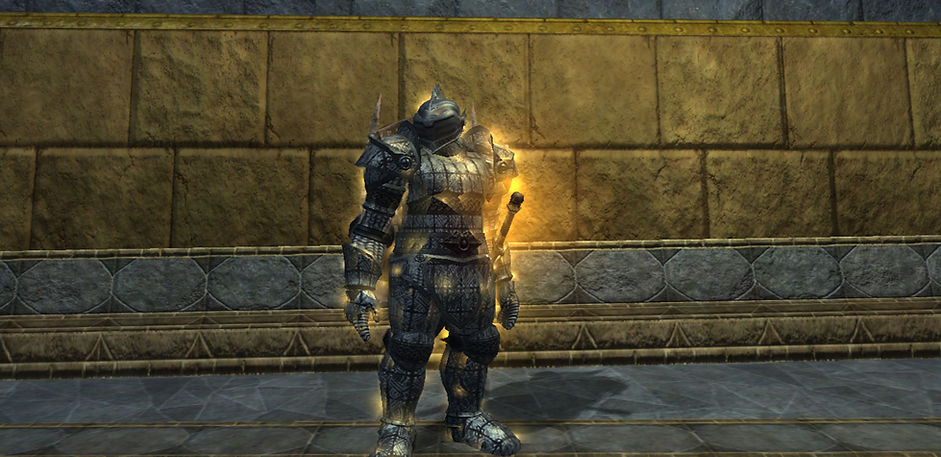
Chronicle of the Veil: Molgrath Gorvakkin, Overlord of the Line
Preserved in the Archives of the Norrath Secret Society, Antonia Bayle
Authored by Mordven Nocturnis, Lorekeeper of the Veil
Prologue: A Word from the Lorekeeper
Not every chronicle begins with a willing subject.
Some souls arrive at the archive door with their histories already arranged, polished, and presented in the order most flattering to the presenter. They have rehearsed the difficult parts into something easier to hold, softened the edges of the failures, inflated the silences between victories with the warm air of retrospective meaning. The Lorekeeper has read many such chronicles. They are competent. They are frequently admirable. They are, in the specific way that all arranged things are, slightly false.
Molgrath Gorvakkin did not arrive at the archive door. He was, in the plainest possible terms, found. He was found in the training yard behind the guild hall, working a practice dummy with the focused and impersonal efficiency of a man who has done this same thing ten thousand times and intends to do it ten thousand times more, not because he is trying to improve upon some inadequacy but because the work itself is the point. The body that does not practice is the body that fails when failure is not permitted. This is his theology, if he has one. This is the closest thing to devotion he has ever publicly expressed.
When informed that the Lorekeeper intended to document his life, he was quiet for a long time. Then he said: "Why."
It was not a question. It was the flat, declarative utterance of a man who has concluded that most explanations do not hold up under examination and is pre-emptively skeptical of this one.
The Lorekeeper explained. The Society preserves its people. The chronicles endure when the people do not. The record of what a person was and what they carried into every encounter they ever walked is not vanity. It is evidence. It is the proof, set down in ink, that a life of this shape was possible, so that those who come after may know what possible looks like.
He was quiet again. Then he said: "Fine."
He returned to the training dummy.
What follows was assembled from observation, from the accounts of those who have stood beside him in the worst places the tiers of Norrath have to offer, and from the occasional, grudging, single-sentence corrections Molgrath himself provided when the Lorekeeper's draft strayed from fact into something he found objectionable.
He found very little objectionable. He is not, at his core, a man who argues about the past. The past has already been settled. What concerns him is the fight in front of him, and the one after that, and the one after that, without end until the ending.
That, too, is canon.
Part the First: Stone Before It Knows It Is Stone
There are places in Norrath that do not appear on the maps carried by the merchants and the generals and the great cartographic institutions of Qeynos and Freeport. These are not places that have been overlooked by incompetent surveyors. They are places that have been deliberately unmapped, because the people who live in them have understood, across generations of hard-won experience, that to exist on a map is to exist in someone else's calculation. And to exist in someone else's calculation is to become, sooner or later, a resource, a problem, or a casualty.
The settlement where Molgrath Gorvakkin was born was such a place.
It had no formal name. It was referred to by those who lived there in terms that described its location relative to things that did have names, which is how places that wish to remain small and ungovernable are typically designated. It occupied a position in the geography of the world that was strategically insignificant to every major power and consequently left alone, which was precisely the outcome its inhabitants had spent generations engineering. They were not hiding. They were simply absent from the kinds of attention that tend to result in armies.
The people of that settlement were Ogres, predominantly, though the word Ogre as it is used by the chroniclers of the wider world does not quite describe what they were. The wider world uses that word to describe a particular combination of size, force, and limited engagement with the subtler concerns of civilization. There is some truth in this, the way there is some truth in most reductions. What the reduction omits is everything that makes a people a people rather than a category. It omits the specific and sophisticated oral traditions they maintained across generations, the elaborate systems by which disputes were adjudicated without recourse to the external institutions of cities that did not claim them, the craftsmanship that accumulated in families across decades and expressed itself in objects built not for decoration but for the specific and demanding requirements of surviving in a world that was not reliably hospitable.
It omits, in particular, the fact that the children born in that settlement were educated in something that the great academies of Norrath do not offer as a formal curriculum: the education of consequence. Every decision had weight. Every weight was felt. There was no distance between the choice and what the choice produced, no buffer of wealth or institutional protection between the action and its results. The children of that settlement grew up understanding that the world had a particular and impersonal relationship with the unprepared, and that preparation was therefore not a matter of pride or ambition but of basic survival mathematics.
Molgrath absorbed this curriculum the way he absorbed everything: deeply, quietly, without requiring it to be announced.
He was a large child, which was unremarkable given his lineage, but there was something in the quality of his attention that distinguished him from the other large children. He watched things. He watched them with the patient, cataloguing intensity of a creature that is not yet ready to act but is building, systematically, toward the moment when it will be. He watched the older fighters when they trained. He watched the way arguments were resolved, noting which approaches produced lasting settlements and which merely paused the hostility for later. He watched the landscape around the settlement with the specific attention of a person who is learning its logic rather than merely its appearance, who wants to know not just what is where but why it is where it is, and what that means for what might happen next.
His father, Durrak Gorvakkin, was a smith. This is a fact worth examining carefully, because in the popular imagination, which tends toward the dramatic, smiths are figures of fire and transformation, heroic shapers of the metals that become the instruments of legend. Durrak was not that kind of smith. He was the other kind: the kind whose value lies not in the occasional masterwork but in the sustained, reliable production of things that work, and keep working, and do not fail at the moments when failing is least acceptable. He made what was needed. He made it to last. He made it without vanity and without waste, and he was, in the estimation of everyone who depended on what came out of his forge, one of the most important people in the settlement, because what came out of his forge was the difference between endurance and its absence.
Molgrath learned several things from watching his father work, though they never discussed what was being learned. The first was that quality is a form of respect. To make a thing that fails the person relying on it is to have told that person, in the most concrete possible language, that their reliance did not matter to you. The second was that the work is never about you. The sword is not a testament to the smith. The sword is a tool in the hands of the person who needs it, and the smith's vanity is irrelevant to that function. The third was that the body doing sustained, demanding work requires the same sustained attention as the work itself. His father maintained his tools with the same care he brought to his craft. He maintained himself the same way. He did not treat his own capacity as a resource to be spent without accounting. He understood that the forge requires the person at the forge, and that person requires maintenance, and the maintenance is not a luxury. It is the prerequisite for everything else.
Durrak Gorvakkin died when Molgrath was old enough for it to matter and young enough for it to leave a mark that did not heal in the ordinary way. He did not die dramatically. He died the way that the quietly essential often die, slowly, of a body that had given everything required of it and was done. He left behind, in addition to the ordinary and devastating absence of a parent, one object of specific intent: a shield, heavy, unpretentious, built by the same hands that had built everything else around Molgrath's childhood with the same fundamental principle applied. It was built to take what was coming. It was built not to fail.
Molgrath did not speak about the shield. He picked it up. He learned it the way he had learned everything else in his life: through the long, patient, undramatic accumulation of understanding that comes only from sustained practice. He took it into the training yard and he worked with it and worked with it until the weight of it ceased to be external weight and became simply part of the weight of himself, until the shield was no longer a thing he carried but a thing he was.
This took years.
He had the years. He used them.
Part the Second: What the Road Asks
The road out of the settlement was not a road anyone told him to take. There was no prophecy. There was no summons from a distant power. There was no mentor figure who appeared at the precise moment of readiness and said the words that set the journey in motion. These are the stories told about roads in the traditions that prefer their heroes gift-wrapped. Molgrath's road was not that kind of road.
He left because the settlement had given him what it had to give, and because the understanding he was pursuing required a larger field of evidence than one settlement, however rich its education, could provide. He was not running from anything. He was, in the specific and deliberate sense that would come to characterize everything he did, moving toward something, though he could not have named the destination with precision. He knew the shape of the thing he was looking for. He did not know where it was. He went to find it.
Norrath in those years was a world in a state of profound reorganization. The events of the Age of Destiny had not merely changed the landscape in the physical sense, though they had done that too, had cracked open old geographies and flooded ancient passages and raised new formations from the beds of seas that had existed since before the oldest living memory of any race. They had changed the landscape of power. Old certainties had dissolved. Old alliances had been rendered obsolete by the simple fact that the parties to them no longer existed, or no longer existed in forms that could honor them. New dangers had emerged from the dissolution of the structures that had previously contained them. The world was working out what it was now going to be, and that working-out was, as such processes always are, expensive.
The roads Molgrath walked were roads through this working-out. They were roads where the consequences of large historical forces expressed themselves in the specific and personal terms of an encounter at a crossroads, or a settlement under siege, or a dungeon that had been sealed for reasons no one living could name, and was now, for reasons no one living had authorized, no longer sealed.
He walked into these situations with the same quality of attention he had brought to everything since childhood. He catalogued. He assessed. He identified the point of maximum pressure and placed himself at it. Not because this was the role assigned to him by some external authority, but because it was, in the plainest possible analysis, where he was most useful. He was large. He was trained. He was capable of absorbing quantities of damage that would end other careers, and of absorbing them without losing the fundamental operational clarity required to continue making decisions in real time. This combination of qualities has a name. The name is main tank, and it is, in the economy of a dungeon encounter, one of the most valuable things a person can be.
He did not seek the name. The name came to him the way all accurate names eventually come to the things they describe: because there was no other word for what he was.
The encounters he passed through in those years shaped him the way the training yard had shaped him: not through the single dramatic transformation that makes for a satisfying story, but through the slow accretion of experience that makes for a reliable person. He learned what could be endured. He learned where the actual limits were, as opposed to where the anticipated limits were, because these are almost never the same thing. He learned the precise art of managing the space between the moment when a healer needs to respond and the moment when the situation becomes unrecoverable, which is the art, more than any other, upon which everything in a coordinated group encounter depends.
He learned, above all, that the line he held was not an abstraction. The people behind that line were real. Their survival was contingent on his performance. His performance was contingent on his preparation, and his attention, and his willingness to be the thing that stood between them and what was coming, without flinching and without revision and without requiring them to know what that cost him.
They did not need to know. That was the point.
Part the Third: Freeport, and the Education of a Harder Lesson
He came to Freeport the way many come to Freeport: without having intended to, and then without being able to imagine having gone elsewhere.
The city is many things to many people. To the chroniclers aligned with Qeynos, it is a monument to the particular ugliness that emerges when ambition operates without conscience. To those who live within it, it is considerably more complicated than that, because most things are more complicated than their external descriptions, and Freeport more than most. It is a city that has stripped away the comfortable distance between what a city actually is and what cities prefer to pretend to be. It does not maintain the civic fiction that power is distributed by virtue. It maintains no fiction at all, which makes it, paradoxically, one of the more honest places in Norrath, provided you are willing to accept honesty in a form that does not make any effort to be pleasant.
Molgrath was willing.
He found in Freeport a world organized around questions he understood. Can you do what you claim? Can you hold what you are responsible for holding? Does your presence in a situation make it better or worse for the people relying on you? These were the questions his settlement had asked of its members. These were the questions he had been answering, implicitly, his entire life. Freeport asked them more loudly and more directly, and attached to the answers more immediate consequences, but the questions themselves were familiar.
He took work where work was available. He did not choose his contracts by their philosophical alignment with ideals he preferred not to carry into professional arrangements. He chose them by the nature of what was being asked and whether he could do it without becoming something he would not recognize. This is a narrower category than it sounds. There are many things Molgrath Gorvakkin will not do. He has never made a list of them. He has never needed to. The things he will not do announce themselves at the moment of encounter with a clarity that does not require deliberation, and he declines them with the same unhesitating bluntness that characterizes his engagement with everything else.
It was in Freeport that he encountered his first truly organized dungeon context: a group assembled not by friendship or family but by the specific and mercenary logic of required roles, brought together to descend into a place that required more than any single person could provide. The place was old. The things within it were older. The encounter demanded coordination of a specific kind, the kind where the person at the front must perform their function not only correctly but continuously, without lapses, without the luxury of waiting for a better moment, because there are no better moments in those corridors. There is only the moment. There is only what you do in it.
He performed. He performed with the completeness that would later become the defining characteristic of his reputation, and he performed without expecting the performance to be remarked upon, because it had not yet occurred to him that others found it remarkable. He had done only what the situation required. That he had done it without apparent strain was, in his assessment, simply a function of adequate preparation.
The others present did not share this assessment. They had encountered many tanks before him. They had not encountered one who managed the position with that particular quality, that density of controlled purpose that made the encounter feel, even at its most intense, navigable. They told him so. He accepted this information with the same flat economy with which he accepted most information. He noted it and filed it and returned to what needed doing next.
He did not yet know that this was the beginning of a reputation. He would have found the concept of a reputation somewhat beside the point.
Part the Fourth: The Vault, and the Weight That Does Not Leave
There is an encounter, not widely spoken of in the formal records of Norrath's dungeon history because the group that survived it was not composed of those who sought public record, that the Lorekeeper has been able to reconstruct from accounts corroborated across multiple independent sources. The specific location is preserved here only as the Vault, because the names of some places carry with them the kind of weight that does more harm than clarity.
The group that descended into the Vault was composed of capable individuals who had, between them, accumulated a substantial body of experience with difficult content. They were not inexperienced. They were not careless. They descended with appropriate preparation and appropriate respect for what they were walking into, and what they were walking into did not respect appropriate preparation.
The encounter did not proceed as intended. This is a formal way of saying that it went wrong in the specific and total manner of things that go wrong when the variables that were expected prove to be different from the variables that are. The composition of the encounter was not what the scouting had suggested. The mechanics were not what the prior intelligence had described. What greeted them in the deepest chamber of the Vault was a thing that had either changed since it had last been catalogued, or had never been correctly catalogued to begin with, and the distinction did not particularly matter because the practical result was the same: the group was in a situation substantially more dangerous than anticipated, and the margin for error had become, very quickly, very thin.
Molgrath was at the front. This is where he always was. He assessed the situation in the first seconds of the encounter with the rapid, unfrightened precision that distinguished him from others who held similar positions, and he understood what the assessment meant. He understood that what was being asked of him had exceeded the parameters within which he had been operating. He understood that several members of the group were already in positions of serious jeopardy. He understood that the path to a survivable outcome ran directly through the most demanding thing the encounter could produce, and that it ran through him.
He did not revise his position. He did not retreat to recalculate. He stepped further into the encounter, which was the only direction in which a solution existed, and he held what needed to be held with the full application of everything he had built across every year of preparation, every training yard session, every encounter navigated, every limit discovered and pressed and understood.
The group survived. Not all of them escaped uninjured. The cost was real and it was distributed across everyone present. But they came out.
Afterward, in the particular silence that follows survival of that quality, someone asked Molgrath how he had done it. He did not understand the question at first. He had done what the situation required. He had identified where the pressure was greatest and placed himself at it. He had managed what needed to be managed. These were not remarkable things in his understanding of them.
He said: "You hold the line or you do not. I held it."
This was his entire account of the matter. The Lorekeeper, who interviewed four other members of that group in the assembly of this chronicle, can confirm that their accounts were considerably longer and considerably more dramatic, and that all four of them described the experience in terms that involved Molgrath specifically, and that what they described was not merely competence but something they struggled to name with precision. One of them, after a long pause, called it the presence of a person who has decided something. Not a person who is trying to hold the line. A person who has already decided, before the encounter began, that the line will be held, and for whom everything that happens within the encounter is simply the working-out of that prior decision.
This is, the Lorekeeper believes, the most accurate description of Molgrath Gorvakkin that has yet been produced.
The decision has already been made. Everything after is execution.
Part the Fifth: The Title
The title of Overlord was not given to him by the Norrath Secret Society in any formal ceremony. It was not inscribed on a rank document or voted upon by the Shadow Council. It arrived the way the most accurate titles always arrive, from the mouths of those who needed a word for what they were seeing and found that the available words were insufficient.
It arrived in the middle of an encounter, which is where most true things about Molgrath Gorvakkin become visible.
The encounter in question involved a dungeon zone whose architecture was designed, in the manner of the most unpleasant dungeon architectures, to deny the person at the front of the group the kind of stable, controllable positioning that makes the role manageable. The zone wanted the line to be fluid. The zone wanted the tank to be reactive rather than definitive, to be responding to conditions rather than setting them. This is, for many tanks, simply the nature of such encounters. You adapt. You manage. You do the best you can within the instability.
Molgrath did not accept the terms.
He spent the opening minutes of the encounter not engaging the primary threat on its preferred terms but repositioning it, refusing the geometry the encounter wanted to impose, resetting the spatial parameters until the conditions were ones in which he could hold the line on his terms rather than the encounter's. This required absorbing a quantity of incoming damage during the repositioning phase that most present found alarming. He was not alarmed. He knew the numbers. He knew what he could absorb and he absorbed it, systematically, without adjustment to his fundamental direction, until the encounter was doing things his way rather than its own.
Someone watching this process said, not quite intending to be heard: "He lords over the whole bloody fight."
The sentence circulated. Words that are accurate tend to circulate. By the end of the encounter, the shortened form had settled into the vocabulary of those who fought beside him with the ease of something that had always been there, waiting to be noticed.
Overlord Molgrath Gorvakkin.
He did not object to the title. He did not embrace it. He absorbed it with the same flat economy with which he absorbed most things and returned to the business at hand.
The title persists. It will persist in these chronicles after everything else about the encounter has been forgotten, because it captures something true, and the things that capture something true do not require the permission of their subjects to endure.
Part the Sixth: What He Carries
The shield Molgrath Gorvakkin carries today is not his father's shield. His father's shield was consumed long ago by the ordinary mathematics of heavy use, replaced when replacement was necessary, replaced again, and again, because the object is not the point. The object is the vehicle for the thing his father put into it, and the thing his father put into it was not a substance that resides in the metal. It resides in the person carrying it. It has been transferred forward across every replacement, intact, because it was never in the shield to begin with.
He maintains his current shield with a thoroughness that others find notable. It is inspected. It is repaired at the first indication of structural compromise, before compromise becomes failure, because failure at the moment of maximum need is not a recoverable outcome and he has never been interested in unrecoverable outcomes. He treats the shield the way his father treated his tools and himself: as infrastructure, as the prerequisite for the function it enables, deserving of the same sustained attention as the function itself.
He trains with it daily. This is not metaphor or approximation. Daily. The training yard is not a place he visits when preparation seems urgently required. It is a place he exists in as a matter of fundamental practice, because the body that does not maintain its capacity is the body that discovers, at precisely the wrong moment, that the capacity is no longer what was expected.
He does not speak of this as discipline. He does not speak of it as devotion. He speaks of it, on the rare occasions when he speaks of it at all, as simply what he does. The distinction he draws is not between the person who trains and the person who does not. The distinction he draws is between the person who is ready and the person who discovers, too late, that they are not.
He has never, in any documented account of his time in Norrath, discovered too late that he was not ready.
This is not luck.
Part the Seventh: The Society and the Line
Molgrath Gorvakkin walks beneath the banner of the Norrath Secret Society for reasons he has not elaborated in any recorded conversation. He is not a person who elaborates. He is a person who acts, and the action of continued membership in an organization whose values he disagrees with is an action he has declined to take. From which the Lorekeeper concludes that he does not disagree with the values.
What he finds in the Society, if the Lorekeeper is permitted to draw the inference that Molgrath himself would not draw aloud, is a group of people organized around a principle he respects: that the content is worth inhabiting fully, worth pressing into completely, worth treating as something other than an obstacle between the present moment and wherever the rush is taking everyone else. He does not rush. He has never rushed. The encounter in front of him is the encounter that matters, and it deserves the full application of everything he is, not the fraction left over after the hurry has taken its share.
He finds, in the Society's progression raids, the specific and demanding context in which what he does becomes most fully visible: a coordinated group, working through content that asks real questions of everyone present, with stakes that are real within the logic of the world they are inhabiting together. He is at the front of that group. He sets the terms of the engagement. He holds the line so that everything behind the line is possible, and what is possible includes the kind of discovery and completion and shared labor that the Society exists to produce.
He does not articulate this. He does not need to.
His position in the formation is the articulation.
The Lorekeeper has observed, across many raids and many encounters spanning multiple tiers, that the group behind Molgrath Gorvakkin fights differently than groups operating without that anchor. The specific difference is difficult to quantify and easy to recognize. It is the difference between a group that is uncertain whether the front will hold and a group that has ceased to consider the question. The latter group fights with a particular freedom, a freedom that comes from having resolved the foundational uncertainty, and that freedom translates into everything they do. They are not spending any portion of their attention on whether the line is going to hold. They know it is going to hold. They know it the way they know, in the middle of a building, that the foundation is solid. The knowledge does not require constant verification. It sits beneath everything else and allows everything else to proceed without the weight of that particular anxiety.
Molgrath produces this condition. He produces it consistently, across encounters that vary enormously in their specific demands, because the condition does not emerge from the specific mechanics of the encounter. It emerges from him. From what he is. From the quality of his presence at the front of the formation, which communicates, without words, the thing his group most needs to know.
The line is held.
Everything behind it is possible.
Part the Eighth: What the Lorekeeper Cannot Chronicle
There are interior lives the Lorekeeper cannot reach.
Molgrath Gorvakkin has an interior life. The evidence for this is not dramatic. It is the opposite of dramatic. It is visible in the particular quality of the silence he keeps after a difficult encounter, the silence of a person who is not merely catching breath but processing something, working something through in the interior space where he conducts the business he does not bring into public view. It is visible in the specific intensity with which he approaches the training yard in the days following an encounter that did not go as intended, an intensity that reads not as punishment but as problem-solving applied to the instrument of himself. It is visible in the way he positions himself, in the moments between the formal structure of a raid, near the members of the group who are visibly struggling, without making the proximity into an event or a conversation, simply being within reach in the way that something solid and reliable is within reach.
He has never said what it costs him. He has never indicated, in any recorded exchange, that it costs him anything at all. The Lorekeeper does not believe this. The Lorekeeper believes that what he carries would make a substantial chronicle in its own right, a chronicle of the private accounting that a person who holds the line for others must conduct with themselves, the ongoing negotiation between what is required and what remains, the management of a capacity that is finite no matter how thoroughly maintained.
He does not permit access to that chronicle. This is his right. The Lorekeeper notes it here not to violate it but to acknowledge it, because a biography that presents only the visible surface of a person is not a biography. It is a monument. Monuments are fine. They are not, however, the same as truth, and the Society's chronicles aspire to truth.
The truth is: there is more to Molgrath Gorvakkin than can be set down here. The portion that can be set down is formidable. The portion that cannot is, the Lorekeeper suspects, where the actual story lives. He keeps it in the interior space where he keeps most things: tended, maintained, and not available for inspection.
This, too, is part of who he is.
Part the Ninth: The Ongoing Chapter
He is not finished.
The chronicle of Molgrath Gorvakkin does not yet have an end, and the Lorekeeper does not yet know what shape that end will take, though the Lorekeeper suspects it will be consistent with everything that has preceded it: undramatic in its surface and considerable in its substance, the kind of end that does not make for stories in taverns but makes for something more durable than stories.
The tiers ahead are real. The encounters that await the Society's progression raids have not yet been walked. The line has not yet been held through all the places it will be required. The Overlord is at the front of a march that has more road to cover, and he is there with the same quality of presence he has brought to every position he has occupied since the training yard of a settlement that does not appear on any map.
He will train tomorrow morning. He will inspect the shield. He will descend into whatever the next encounter requires and take his position at the front of the formation and hold the line with the full weight of everything he is. He will not speak more than necessary. He will not seek acknowledgment of what he has done. He will receive the incoming damage, manage the margins, control the terms of the engagement, and provide, to everyone behind him, the specific and irreplaceable gift of a settled question.
The line is held.
Everything behind it is possible.
He was asked, at the conclusion of the Lorekeeper's inquiry, whether there was anything he wished to add to the record. Whether there was something the chronicle had missed. Something he wanted the Society to know about him that the chronicle had not captured.
He was quiet for a long time.
Then he said: "Tell them I'll be at the front."
He returned to the training yard.
Seek. Discover. Endure.
Mordven Nocturnis, Lorekeeper of the Veil Norrath Secret Society, Antonia Bayle